Most advice about receding hairlines is useless. "Just shave it all off." "Own your baldness." "Confidence is key." Cool, but you're not ready to buzz it down to nothing, and you want to know what haircut makes sense right now, with the hair you currently have.
Here's the real talk about what works, what doesn't, and how to make the most of a receding hairline without pretending it's not happening.
Understanding What You're Working With
Not all receding hairlines are the same. Where and how your hair is thinning determines what cuts will work.
The M-shape recession is the most common. Your hairline pulls back at the temples, creating an M or widow's peak shape. The front-center might still be strong.
The overall pushback means your entire hairline is moving backward evenly. No dramatic temple recession, just everything shifting back.
Thinning on top combined with recession means you're dealing with two issues - the hairline receding and the crown area thinning out.
Diffuse thinning is when your hairline isn't necessarily receding dramatically, but the hair along it is getting finer and sparser.
Look at your specific situation. A cut that works for temple recession might not work if your whole hairline is thinning. You need to match the solution to your specific pattern.
Cuts That Make It Worse
Let's start with what not to do, because a lot of guys are making their receding hairline more obvious with the wrong cut.
Long hair that you comb forward doesn't hide anything. It looks like you're trying to hide it, which draws more attention to it. Plus wind, hats, or movement expose what you're covering anyway.
The comb-over is obvious. Taking hair from one side and sweeping it over a bald spot fools nobody. Everyone can see what you're doing.
Super short buzz cuts can emphasize the shape. If you buzz everything down to the same length, the receding pattern becomes more visible because there's no style to distract from it.
Dramatic side parts with slicked hair highlight the problem. When you slick your hair to the side, you're creating a clear line that shows exactly where your hairline is.
Really long styles make thin areas more obvious. The longer your hair, the more weight it has, which can make thinning areas look thinner by comparison to areas with fuller hair.
Anything that requires a perfect hairline to look good. Styles that depend on clean, straight edges along your forehead will constantly remind you (and everyone else) that your hairline isn't what it used to be.
The wrong cut doesn't just fail to help - it can make you look like you're desperately trying to hide something.
Cuts That Work
Now for what helps. These styles work with a receding hairline instead of fighting against it.
The textured crop is one of the best options. Short on the sides, textured length on top pushed forward slightly. The texture breaks up the line of your hairline so it's less obvious where it starts.
The crew cut works well because it's short enough that the recession doesn't stand out, but it's not so short that it emphasizes the pattern. It's clean and straightforward.
The buzz cut (but not too short) at about 6-8mm can work. It acknowledges what's happening without trying to hide it, and the slightly longer length gives you some coverage without looking like you're clinging to hair that's gone.
The short quiff pushed up and back can work if you have enough hair in front. The upward movement draws the eye up rather than to the hairline itself.
Messy, forward-styled hair (not combed forward, styled forward) with texture can minimize the appearance of recession. The key is texture and messiness, not sleek coverage.
The classic taper with slightly longer top and very short sides shifts focus to the overall shape rather than the hairline.
The best cuts acknowledge reality without trying to perform magic tricks with your remaining hair.
Length Matters More Than You Think
The length you choose makes a huge difference in how your receding hairline looks.
Too long makes thinning obvious. When you have length, the thin areas become more apparent because there's more contrast between thick and thin sections.
Too short can expose everything. Going extremely short removes any ability to create texture or style that distracts from the hairline.
The sweet spot is usually 1-3 inches on top. This gives you enough length to create texture and style, but not so much that thinning becomes the dominant visual.
The sides should be shorter than the top. This creates contrast and draws attention to the styled top rather than the edges of your hairline.
Gradual fades work better than harsh lines. A gradual fade from short sides to longer top creates a smooth transition that's more forgiving than stark contrasts.
Consider that length will look different as hair thins. What worked as a longer style when your hair was thicker might not work the same now. You might need to go shorter than you used to.
Work with your barber to find the length that maximizes what you have without pretending you have more than you do.
Styling Techniques That Help
How you style your hair matters as much as the cut itself.
Add texture instead of slicking it down. Products that create texture and volume make your hair look fuller. Slick, flat styles make thinning more obvious.
Style slightly forward and up, not straight back. Pushing everything straight back exposes your hairline completely. A slight forward angle with upward movement is more forgiving.
Use matte products, not shiny ones. Shine shows scalp through thin hair. Matte products add texture without making your scalp visible.
Don't overapply product. Too much product weighs hair down and makes thin areas look thinner. Use less than you think you need.
Blow-dry for volume. Even if you don't normally blow-dry, doing it when you have thinning hair adds volume and makes hair look fuller.
Avoid tight, controlled styles. The more structured and precise your style, the more obvious any imperfections or thin spots become.
The goal is to create visual interest and texture that doesn't rely on a perfect hairline to look good.
The Beard Factor
If you're dealing with a receding hairline, your beard situation matters.
A beard balances out a receding hairline. It adds hair to the lower part of your face, which takes visual emphasis away from the top of your head.
The fuller the beard, the more it helps. A thick, well-maintained beard creates enough visual weight on the bottom of your face that people notice it more than your hairline.
Keep it groomed though. A scraggly beard doesn't help. It needs to look intentional and maintained, not like you gave up on grooming.
If you can't grow a good beard, don't force it. A patchy beard won't balance anything out and just adds another problem to manage.
Stubble can work too. You don't need a full beard. Even well-maintained stubble adds definition to your lower face.
Think of your whole head as one unit. If the top is thinning, adding groomed facial hair to the bottom creates better overall balance.
When to Just Buzz It
Sometimes the best move is to stop fighting it and buzz everything short or shave it completely.
If your hairline has receded past the point where styling helps. When you've lost enough hair that no cut can make it look good, it's time to let go.
If maintaining what you have is making you miserable. Constantly worrying about your hair, checking it, styling it perfectly - if it's consuming your mental energy, it might be time to simplify.
If the contrast between thick and thin areas is extreme. When you have really full hair in some places and almost nothing in others, trying to blend it looks worse than just cutting it all short.
If you're spending a fortune on treatments that aren't working. At some point, acceptance is cheaper and less stressful than fighting a losing battle.
If you're ready. Sometimes you just hit a point where you're done dealing with it and ready to move on.
Buzzing it or shaving it isn't giving up. It's often the most confident move - acknowledging what's happening and choosing a clean, intentional look instead of desperately clinging to what's left.
What About Hair Products and Treatments?
This isn't a blog about hair loss treatments, but it's worth addressing briefly.
Minoxidil (Rogaine) can slow or stop recession for some guys. It doesn't work for everyone, and you have to use it consistently forever. Talk to a doctor.
Finasteride (Propecia) works for some guys. It has potential side effects that you need to understand and discuss with a doctor before starting.
Hair fibers and concealers can help for special occasions. They're not daily solutions, but they can fill in thin areas temporarily for important events.
Good haircuts and styling matter more than products. Even if you're using treatments, you still need a cut that works with what you currently have.
Transplants are expensive and not always worth it. They work for some guys in specific situations, but they're not a magic solution and they cost a lot.
Don't pin all your hopes on treatments. Even if they work, they take months to show results. You need a good haircut that works right now.
The Mental Side
Let's be real - losing your hair messes with your head (no pun intended).
Most people don't notice or care as much as you think. You stare at your hairline every day. Other people barely register it.
Confidence matters more than your hairline. A guy who's comfortable with a receding hairline looks better than a guy with a full head of hair who's insecure and uncomfortable.
It happens to most guys eventually. By 35, two-thirds of men have some hair loss. By 50, it's 85%. You're not alone or unusual.
How you handle it matters more than whether it's happening. Nobody cares if your hairline is receding. They care if you're weird and obsessive about it.
Your hairline doesn't define your appearance. It's one feature among many. Your overall grooming, style, fitness, and how you carry yourself matter way more.
Getting the right haircut helps with confidence because you stop worrying about whether your hair looks okay and can focus on other things.
Working With Your Barber
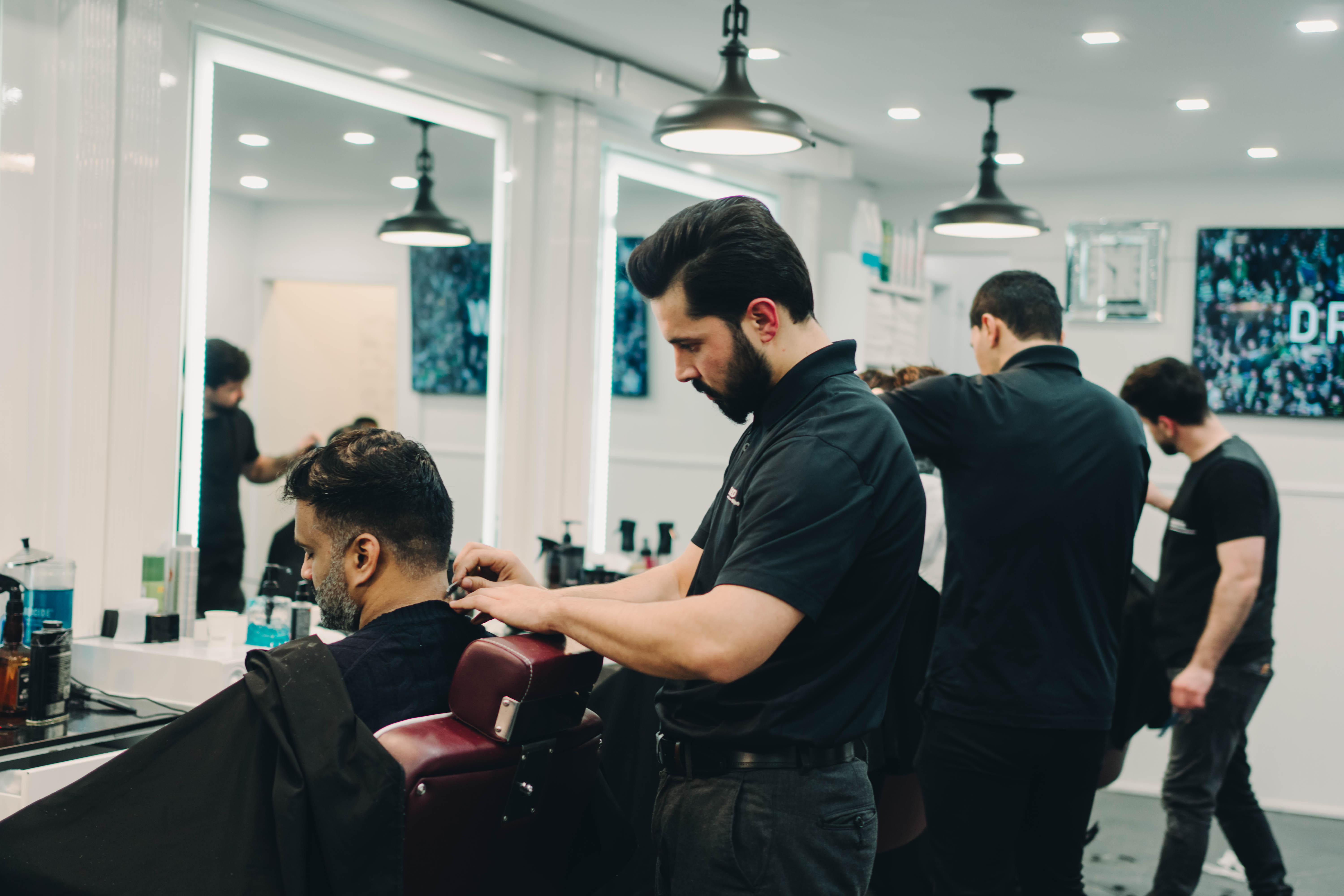
Your barber sees receding hairlines every single day. Use that expertise.
Be honest about what's happening. Don't pretend your hairline isn't receding. Your barber can see it and will give you better advice if you're upfront.
Ask what they recommend. Barbers know what cuts work for receding hairlines. Trust their judgment.
Bring photos of styles you like. But be realistic - if the guy in the photo has a full hairline and you don't, your version will look different.
Tell them your styling routine. If you're not going to spend 20 minutes on your hair every morning, don't get a cut that requires it.
Be open to trying something different. The cut that worked when you had a full hairline might not be the best option now.
A good barber will work with what you have and give you something that looks good without requiring magic or denial.
The Bottom Line
The best haircut for a receding hairline is one that works with what you have, not one that tries to hide what's happening.
Shorter, textured cuts usually work better than longer styles. Avoid anything that depends on a perfect hairline to look good. Use styling products that add texture and volume, not slickness and shine.
And remember - your hairline is one feature. It's not your whole appearance. A good haircut, good grooming overall, and confidence will take you further than desperately trying to make your hairline look like it did 10 years ago.
Dealing with a receding hairline and not sure what cut would work? Book with Jded Barbershops and we'll give you a style that works with your hair, not against it.
.avif)