But what actually just happened? How did your barber take clippers and create that seamless blend? And why does a fade from a good barber look completely different from a fade someone's cousin did in their basement?
Here's what goes into a perfect fade - the technique, the skill, and why it's harder than it looks.
What a Fade Actually Is
Let's start with the basics because a lot of guys use the word "fade" without really knowing what it means.
A fade is a gradual transition from short to long. Hair goes from very short (or skin) at the bottom to longer at the top, with a smooth gradient in between.
It's not just short sides. Clipping the sides short doesn't make it a fade. A fade is specifically about the blend - the smooth transition between lengths with no visible lines.
The gradient is the whole point. Anyone can cut hair short on the sides. Creating a seamless gradient that looks smooth from every angle is the actual skill.
There are no guards in the blend zone. The middle section where the fade happens is done without clipper guards, using just blade technique and control.
It requires multiple passes. Your barber goes over the same area many times, gradually refining the blend until it's smooth.
When someone says they want a fade, they're asking for this specific blending technique, not just short hair on the sides.
The Different Types of Fades
Not all fades are the same. Where the fade starts and how high it goes matters.
Low fade: Starts just above the ear and curves around the back. The blend happens in a small area low on the head. Most conservative and professional-looking.
Mid fade: Starts about halfway up the sides. The blend zone is larger and more visible. This is the most common type of fade.
High fade: Starts high on the sides, sometimes almost at the temple. Creates dramatic contrast between short and long. More bold and eye-catching.
Skin fade (bald fade): Goes all the way down to bare skin at the bottom. The gradient goes from skin to length. Requires the most skill and maintenance.
Drop fade: Curves down behind the ear instead of going straight across. Follows the natural shape of the head more closely.
Burst fade: Fades in a semi-circle around the ear. Often used with mohawks or styles that need hair left in the back.
Each type creates a different look and works better with certain face shapes and styles. Your barber should recommend which type fits what you're going for.
The Tools That Make It Happen
Fades require specific tools, and the quality of those tools matters.
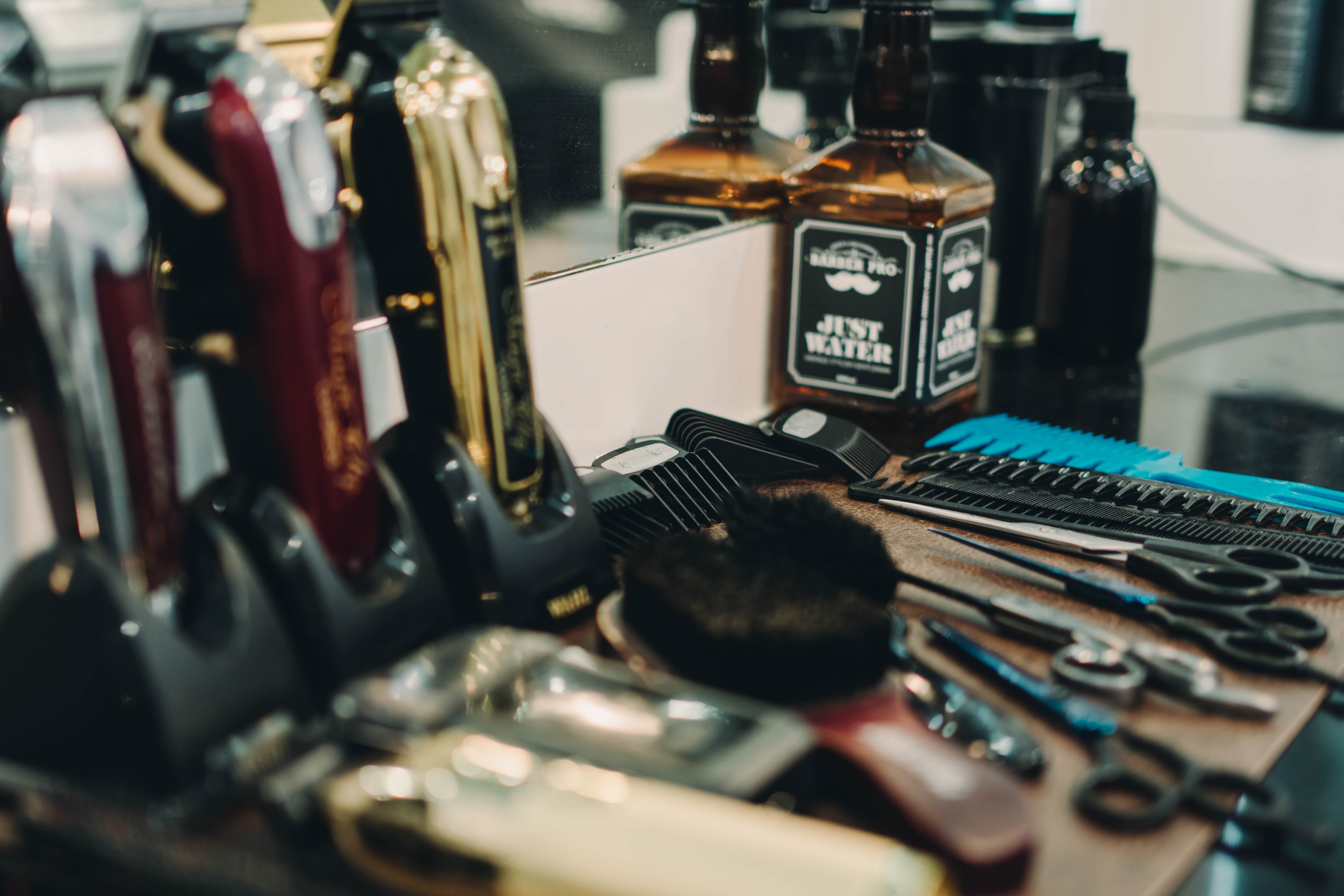
Clippers for the bulk: Heavy-duty clippers remove the initial length and do the higher sections of the fade.
Trimmers for the detail: Smaller, lighter trimmers do the fine work near the skin and create clean lines.
Multiple guards: Barbers use several different guard sizes to create the initial layers before blending.
A steady hand: The most important tool. Without control and precision, the best clippers in the world won't create a clean fade.
Good lighting: Barbers need to see every detail clearly. Bad lighting makes it impossible to spot imperfections.
A mirror to check angles: The back and sides need to be viewed from multiple angles to ensure the fade is even.
Cheap clippers or dull blades make fades harder to execute and the results look worse. Professional tools matter.
The Technique: How Fades Are Built
Here's what's actually happening when your barber creates a fade.
Step 1: Establish the guideline. Your barber decides where the fade will start and creates an initial line using a specific guard length. This is the foundation.
Step 2: Layer the guards. They work through progressively longer guards (#0, #1, #2, etc.), each one going slightly higher than the last. This creates the basic layers.
Step 3: Blend without guards. Now comes the real skill - using clippers with no guard to blend between those layers. This is done with the blade open or closed at different angles.
Step 4: The flick technique. Your barber uses a flicking motion, lifting the clippers away from your head as they move upward. This creates the gradient by removing less hair as they go higher.
Step 5: Multiple passes from different angles. They go over the same area many times - straight up, diagonal, side to side - to eliminate any lines or spots they missed.
Step 6: Check and refine. Your barber steps back, looks at the fade from different angles, and fixes any imperfections. This checking and refining happens constantly throughout the process.
Step 7: Detail work with trimmers. The very bottom edge and any final cleanup happens with trimmers to create sharp, clean lines.
Each step matters. Skip one or do it poorly and the fade won't look right.
Why Fades Are Harder Than They Look
Watching a barber do a fade looks easy. Trying to do one yourself reveals how hard it actually is.
You're working in three dimensions. A head isn't flat. The fade has to work around curves, bumps, and angles. It needs to look smooth from the front, sides, back, and every angle in between.
Hair grows in different directions. The grain changes around your head. Barbers have to account for this and adjust their technique constantly.
One mistake shows immediately. Cut too much in one spot and you've created a bald patch. Miss a section and there's a visible line. Fade work doesn't hide errors.
The margin for error is tiny. Fades happen in an area that might only be 2-3 inches tall. Small mistakes are obvious.
Symmetry is critical. Both sides need to match perfectly. If one side is higher or blended differently, it's immediately noticeable.
It requires feel, not just sight. Experienced barbers can feel when the blend isn't smooth, even before they see it.
This is why learning to do good fades takes months or years of practice. It's not a technique you pick up from a YouTube video.
What Separates a Good Fade from a Great One
All fades aren't equal. Here's what makes the difference.
Smoothness: A great fade has no visible lines anywhere. It's a perfect gradient from dark to light with no spots where you can see where one length ends and another begins.
Symmetry: Both sides match exactly - same height, same curve, same gradient. Not just similar, identical.
Clean edges: The bottom line is crisp and intentional. The top of the fade blends seamlessly into the longer hair.
Consistent all around: The fade looks the same from every angle. No flat spots, patches, or areas that don't match the rest.
Follows the head shape naturally: A great fade enhances the natural shape of your head. It doesn't fight against it or create weird geometric patterns.
Lasts longer: A perfectly executed fade grows out more gracefully. It looks better for more days before it needs a touch-up.
You can see the difference between a mediocre fade and a great one immediately. Great fades look almost effortless, like your hair just naturally graduates that way.
Common Fade Mistakes
Here's what goes wrong when fades aren't done well.
Visible lines: You can see distinct lines where guard lengths change. This is the most obvious sign of a bad fade.
Uneven sides: One side is higher, lower, or blended differently than the other.
Bald spots or patches: Areas where too much was taken off or the blend isn't smooth.
The "speed bump": A ridge or bump in the middle of the fade where hair suddenly gets thicker before continuing the gradient.
Choppy texture: The fade looks rough or choppy instead of smooth and clean.
Wrong placement: The fade starts too high, too low, or curves at the wrong angle for your head shape.
Fuzzy edges: The bottom line isn't clean and sharp - it's blurry or uneven.
Any of these mistakes ruins the fade. It's not just about getting close - it needs to be right.
How Long Does a Good Fade Take?
If your fade is done in 10 minutes, it's probably not great. Here's the realistic timeline.
Basic fade: 15-20 minutes. This is for the fade itself, not including the top or other styling.
Skin fade: 20-30 minutes. Going all the way to skin requires more precision and more passes to get it smooth.
Complex fades with designs: 30-45 minutes. If there are line designs, multiple fade levels, or intricate work, it takes longer.
Fixing or touching up: 5-10 minutes. If you're just getting your fade cleaned up between full cuts, it's quicker.
Learning barbers: longer. Someone still perfecting their fade technique will take more time. That's okay - better slow and careful than fast and sloppy.
Don't judge a fade by how fast it was done. Judge it by the result. A fade that takes 25 minutes and looks perfect is better than a 10-minute fade with visible lines.
Fade Maintenance: The Reality
Fades don't stay fresh forever. Here's what to expect.
Week 1: Looks perfect. This is peak fade. Enjoy it.
Week 2: Still looks really good. Starting to grow out slightly but most people won't notice.
Week 3: Noticeably grown out. The blend is less sharp, the bottom is getting fuzzy. Still acceptable but not fresh.
Week 4: Needs attention. The fade is basically gone - it's just layered lengths now without smooth blending.
Week 5+: Overdue. You've lost the fade entirely and it's starting to look unkempt.
If you want to keep a fade looking sharp, you need cuts or touch-ups every 2-3 weeks. Some guys stretch it to 4 weeks but that's pushing it.
Can You Fade Your Own Hair?
Short answer: not really. But let's break down why.
You can't see what you're doing. Even with multiple mirrors, you can't see your own head from all angles clearly enough to blend smoothly.
The angles are wrong. Holding clippers to fade the back of your own head puts your arms and hands in awkward positions that make precision impossible.
You can't check symmetry properly. Matching both sides requires being able to see them at the same time and compare directly.
One mistake ruins it. There's no undo button. Cut too much and you'll need a barber to fix it anyway.
The back is nearly impossible. Even talented amateur barbers can't fade the back of their own head well.
Some guys learn to do basic cleanup on the very edges or bottom line between barber visits. But actual fade blending? That requires another person with training and experience.
What to Look for in a Barber's Fade Work
How do you know if your barber is good at fades before you sit in their chair?
Look at their portfolio. Good barbers have photos of their work. Look specifically at fade photos from multiple angles.
Check for consistency. One great fade could be luck. Multiple great fades show skill.
Read reviews mentioning fades. If people specifically compliment the fades in reviews, that's a good sign.
Watch them work. If you can see a barber doing a fade on another client before your appointment, you'll get a sense of their technique and attention to detail.
Ask about their experience. How long have they been cutting? Where did they learn? Fades take time to master.
Trust your eyes. When you get your fade, check it from all angles before you leave. If it doesn't look smooth and even, that tells you something.
Don't be afraid to try a different barber if the fades you're getting aren't up to standard. It's worth shopping around to find someone who does them well.
The Art Part of the "Art of the Fade"
Fades are technical, but there's an artistic element too.
Knowing what works for each head. Every head is shaped differently. Good barbers adapt the fade to enhance your specific head shape.
Choosing the right type of fade. Low, mid, or high - the decision should be based on your face, hair, and style, not just what's popular.
Creating flow. A great fade doesn't just blend the sides - it connects to the rest of the haircut in a way that makes sense visually.
Adding personality. Some barbers can add subtle details or variations that make the fade unique without being gimmicky.
Knowing when to stop. Perfect is the enemy of good sometimes. Knowing when the fade is done and not overworking it is a skill.
The technical execution gets you a clean fade. The artistic sense gets you a fade that looks amazing on your specific head.
Why Fades Became So Popular
Fades aren't new - they've been around in some form for decades. But they exploded in popularity over the last 10-15 years.
They look clean and modern. Fades give an updated, contemporary look that feels current.
Social media showcased them. Instagram and YouTube made it easy for barbers to show their work, and fade videos went viral.
They work with many styles. You can fade the sides with almost any top style - quiff, crop, curly, long, whatever.
They're customizable. Low, mid, high, skin, drop - lots of options mean fades work for different preferences.
They show skill. A great fade is impressive. It signals that your barber knows what they're doing.
Fades went from a specific style to basically the default for most men's haircuts. They're not going anywhere anytime soon.
The Bottom Line
A perfect fade is smooth, symmetrical, and looks effortless even though it requires significant skill and technique.
It's built through layering, blending without guards, multiple passes from different angles, and constant refinement. The process takes 15-30 minutes depending on complexity.
Not all barbers are equally good at fades. It's a specific skill that takes time to develop. Finding a barber who consistently executes clean fades is worth the effort.
If you want to keep your fade looking fresh, plan on cuts every 2-3 weeks. Fades grow out faster than other styles and need regular maintenance.
Want a fade that's actually smooth and clean? Book with JDED - our barbers have the technique and experience to create fades that look right from every angle.
.avif)